Practice Room Playbook is officially LIVE

Today is a big day for me.
The app I've been working on, in one form or another for about ten years, is finally live, launched, and ready to be seen by the world. It's called Practice Room Playbook and, like the book, it was 100% born out of my own struggles with audition prep.
So I want to tell you how it got here.
So many pieces, so little chops.
When I was in school, and even when I started my first playing job, I had a really hard time figuring out what to focus on each day. This was especially true when a lot of things were coming up at once.
I'd sit down and write eeeeevery piece I had on the horizon onto one giant list. (I still do this, and I still recommend it.) Then I'd look at the list and think, "Oh God. Where do I start?"
I was diligent and thoughtful in my planning, but I often practiced whatever I was most worried about, whatever I felt like playing, or whatever was coming up soonest. The things that weren't scary or urgent quietly slipped through the cracks until one day they were both.
It's hard to make good decisions about your practice when you're going off a feeling. And it takes a surprising amount of mental energy to keep wondering if you're preparing the right things.
Attempt 1: Spreadsheet.
Somewhere between 2016 and 2018, I was sitting on my couch at Colburn, building a repeatable blueprint for my own audition preparation. I wanted a plan I could follow every time instead of reinventing the wheel before every audition.
Don Greene and Andrew Bain saw what I was working on and encouraged me to put it out into the world. So in 2018, I published the first version of Audition Playbook. I mailed every one of those copies out myself. (If you have the old spiral-bound version, you've been with me since the very beginning.)
As more people read the book, I started building little digital tools to go along with it, like practice planners and audition expense trackers. One of those early Google Sheets turned out to be the beginning of this whole app.
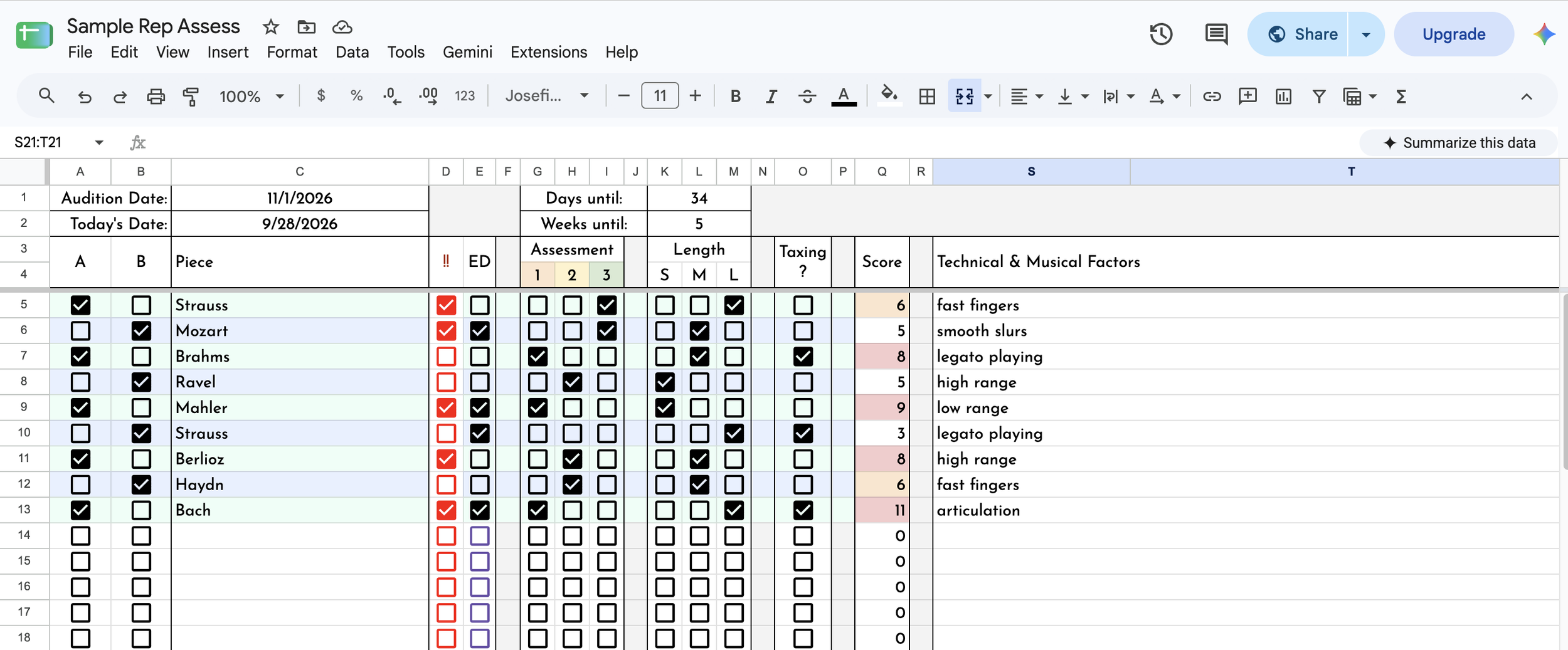
google sheet v1
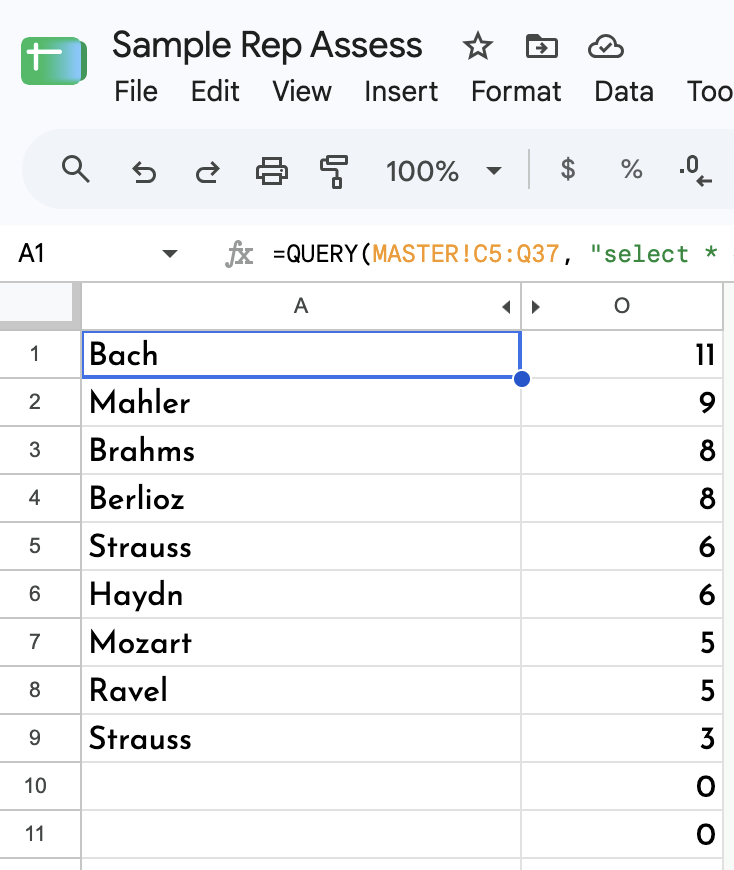
I knew there had to be a smarter way to decide what to practice each day. I also knew that smarter way was not going to be calculated by my own brain every morning. So I made a spreadsheet.
You listed all the repertoire you had coming up, gave each piece an assessment and a length, and noted whether it was taxing. The sheet gave each piece a score and handed your list back in priority order.
It was promising, but it wasn't enough.
What if the Mahler was next week and the Brahms was six months away? What about the pieces I hadn't touched in weeks? How was I supposed to factor in endurance? And what could it actually tell me about my technique and what was holding me back?
There was so much more I knew it could do. I just didn't have the time, the tools, or the money to build it.
To the back burner the idea went.
Attempt 2: Airtable.
A couple of years ago, I tried to build a smarter version of the Google Sheet in Airtable and had a small group of people test it out.
It was not smarter. It was more complicated and it ended up being more work than it was worth.
So I scrapped it, and yet again, the project went back on the back burner.
Attempt 3: the real deal.
So, finally, about a year ago, I bit the bullet of time and money and started building the tool I always wanted to build.
Since then, it's gone through three rounds of beta testing with the most wonderful people. I honestly couldn't begin to explain the differences between the version my first testers logged into and the one that's live today. They found bugs, gave me ideas, and pointed out practice workflows I never considered previously. Features like doubling instruments and the practice log views came straight from their feedback, and the app is so much better because of them.
Is it perfect? Bugless? I'm sure real users will find bugs the testers didn't, and I'll patch them as they come in, and I'm also sure you'll have ideas that help it keep growing. But it's been thoroughly tested and it's ready!
So let’s talk about what it does.
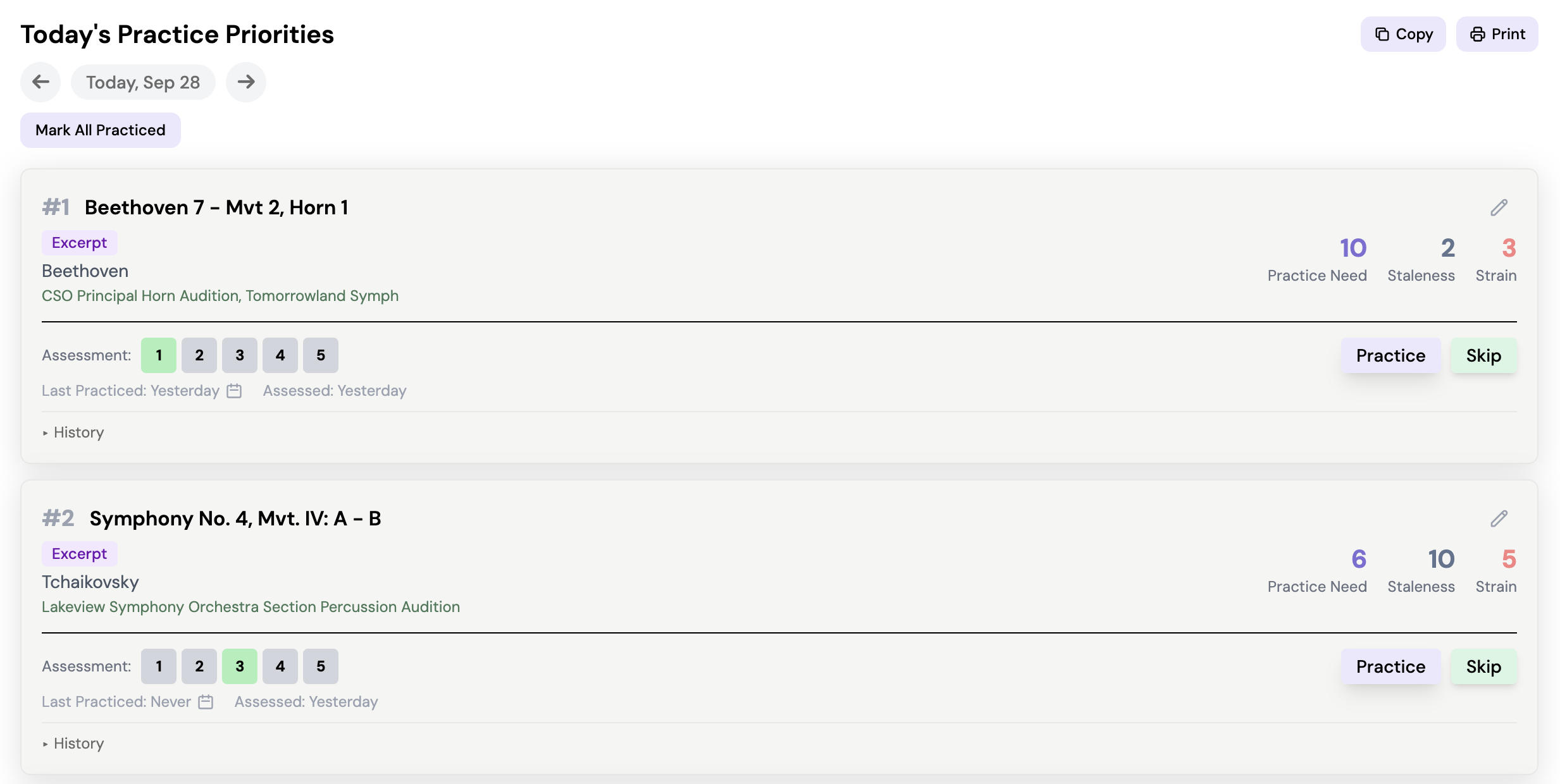
Practice Room Playbook does all the stuff I wanted the Google Sheet to do ten years ago and sooooo much more. But the basic problem it solves is still the same: I have all this music to practice. What should I work on today?
Each day (or week, or at the interval of your choice), the app builds a prioritized practice list from three things:
Your own assessment of how well each piece is going
How soon you have to perform it
How long it's been since you last practiced it
From there, you can factor in endurance limitations, filter by specific performances, practice groups, etc. You can also filter your pieces by technique to see which techniques are struggling the most and which pieces keep scoring low for the same reason. Sometimes that common thread is the most useful thing you'll learn all week.
It also won't let anything disappear on you. If you've got a piece down cold but haven't touched it in months, it's still going to show up on your list eventually.
The biggest thing I wanted this app to do was help you feel more balanced in your preparation. That was also the thing I heard most often from beta testers. They stopped burning mental energy on whether they were practicing the right things, because the app was helping them decide based on how their week actually went.
Free vs. Pro vs. Student
I wish I could keep it entirely free, but it turns out this is a costly endeavor to keep operational, let alone build!
That said, I made sure the free version is still quite useful, especially for younger students who don't have a lot of repertoire on their stand yet. It's designed to grow with you as your needs grow.
Every account gets a free 21-day trial of Pro, no credit card required. Students get a steep discount on Pro, which works out to $4 a month.
One more thing...
The first 100 people who upgrade to Pro using the code FOUNDER100 will lock in $60 a year for as long as they stay subscribed. (Not you, students. Your deal is already better.)
Please check it out. And please share it with anyone who might find it useful.
Thank you all for your support in this endeavor and all the other wacky ideas I’ve had over the years!