Why Musicians Should Record Their Auditions (And How to Do It Right)
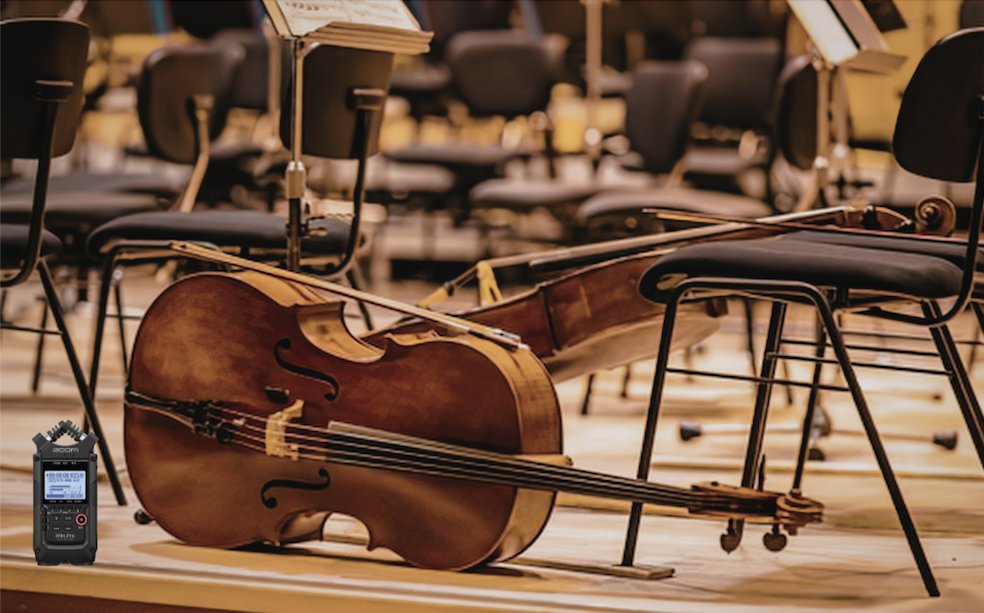
Do you record your auditions?
For me, the answer for most of my audition-taking career, was no. When I finally started, I could have kicked myself for how much insight I had been leaving on the table.
For orchestral musicians, especially early in their career, auditions are one of the few truly high-pressure performance environments we face on a regular basis. But most of us walk out with nothing but our own shaky recollection of what just happened, a memory that is even less reliable under stress.
Over the years I've run informal polls on this and the results have been surprisingly close. My most recent poll landed at 55% yes, 45% no. I honestly expected a bigger gap but, for a number of reasons, a significant chunk of the audition-taking community still hasn't bought in.
This article is my attempt to make the case, address the most common reservations, and give you a practical road map for actually doing it on audition day. Buckle up, 45%!
One thing to add… If you’re one of the no’s and you are doing great in auditions and winning the jobs you’re going for… heck yeah, don’t change a thing! But if you’re not, at least hear me out.
The case against recording (and why none of it holds up)
Let me give the skeptics their due. These are the most common reservations I hear:
“I don't want a phone or device in the room with me."
Totally valid. There are ways around this that don't require your phone anywhere near you. (More on that below).
“What if it goes off?"
Airplane mode. Always airplane mode. This is non-negotiable whether you're recording or not.
“I haven't practiced it, and I don't want to add something new on audition day."
10000%
This is the most legitimate objection and the one I want to spend the most time on. The solution isn't to skip recording. It's to practice it.
If you're going to record an audition, the recording process itself needs to become part of your audition preparation — just like mock auditions, listening, and mental practice.
We'll get into specifics below, but the short version is this: if the setup feels stressful on audition day, you waited too long to practice it.
One caveat: if the recorder itself becomes a source of distraction or anxiety in the room, that's worth paying attention to. It may be a sign that the setup needs more practice — or that there's a broader relationship with performance anxiety worth exploring.
“Is it even allowed?"
Some audition notices explicitly prohibit recording and this is usually tied to specific union rules governing who can record what in a given hall. My guess is that these rules exist more to protect orchestras from legal gray areas than to prevent a nervous horn player from capturing their own Short Call.
I am absolutely not a legal expert and I'm not here to encourage anyone to break rules.
But two things are worth noting:
The vast majority of auditions don't mention recording restrictions at all.
If you're recording discreetly — phone tucked in a binder pocket, Apple Watch on your wrist — who is going to know?
The key, as always, is that this recording is purely for your own private use. Not for posting, not for disputing an outcome. Just for you.
Why you actually need this data
Cold hard truth: if you were truly in it during your audition — fully committed, playing with intention, present in every excerpt — then your analytical brain was (correctly) turned off. Which means your memory of what happened is compromised at best.
We think we remember, but we don't.
Even if you were to journal immediately after the round, your notes would be based on a filtered, imperfect, emotionally-charged recollection of events. The excerpt that felt like you channeled Sarah Willis? Listen back. Sometimes it's exactly as good as it felt. And sometimes... not quite the low horn goddess after all.
The reverse is equally true and often more valuable. I've listened back to rounds that felt shaky and uncertain — only to hear something that came across confident and clean. That information is mentally soooo valuable going into the next audition. Instead of dreading that excerpt, I can go in knowing: even when this feels uneasy, it comes across strong. That is a compounding confidence.
What audition recordings actually reveal
Some of the most common surprises when people first listen back to their audition recordings:
Intonation that drifted in ways they never noticed at home
Tempo and rhythm changing under pressure — especially rushing
The time between excerptsgetting compressed. That 30-second routine can turn to 10 in a flash.
Phrase endings getting clipped
Breathing becoming rushed, shallow, or tense
Overall energy and projection reading differently than it felt internally
Character and musical picture falling flat in the room
One thing I hear constantly is: “I had no idea I was rushing that much.”
And the scary part is that many of these things don't show up in the practice room at all. Often they don't even show up in mock auditions.
Because the pressure dial is at a different level in the real thing and so are your reactions to it.
The real audition environment changes your physiology. Recording the actual audition gives you a category of information you simply cannot get any other way.
How do I actually do this?
First, a ground rule: Whatever method you choose, practice it first.
Do a full mock audition using the exact setup you plan to use on audition day. Start in a warm-up room, click record, walk to the audition room, play.
The last thing you want is to be fumbling with a device or second-guessing yourself on the day. Practice this enough that it is automatic.
Lastly, remember that the goal is not studio-quality sound. We just want the data.
Audition recording methods:
1. Phone in the back pocket of a binder. Put your phone in the back pocket of a three-ring binder behind all your music. Click record in the warm-up room before you ever leave, or even start it several minutes early so there's no last-minute scramble. Airplane mode, silent mode, and forget about it. Click stop after you've left the room and are done with your round.
2. Apple Watch (or similar). This is what I've used. No phone in the room at all — I left it behind entirely. With the watch on airplane mode and unsynced from my phone, I used the Voice Memos app to click record before leaving the warm-up room. Sound quality isn't pristine, but it tells you everything you need to hear. Especially useful if you really don't want any device in your hands or on your stand. Turn on Theater Mode so the screen does not pop up.
3. iPad or tablet (if you're already using one). If you're reading music off an iPad in the audition, run a voice memo app in the background. You're already bringing the device — this is a no-brainer.
4. Bag or case pocket (if you're already bringing one in). If you're already planning to bring a bag or case into the room — trumpet players with multiple horns, for example — tuck a phone or Zoom recorder in a pocket and forget about it. ONLY do this if the bag is already part of your plan; don't bring one in just for the sake of concealing a device.
5. Phone or Zoom recorder in a pocket. Last resort. Sound quality suffers, but you'll still get a usable read on tempo, rhythm, and general character. Better than nothing.
You paid for this audition. Make sure you get your money's worth.
Whether you spend three minutes on that stage or several hours over multiple rounds, that time is yours. You earned it. You paid for it with travel costs and weeks or months of preparation. Every moment on that stage deserves your full attention going in and your full analysis coming out. You should walk away with something, no matter the outcome. Even if that something is just the knowledge that you rush Till under pressure.
And statistically? You know the math. Many people show up; one person gets the job. (Or, increasingly, no one does). Either way, the vast majority walk away without a job. But how many of them walk away with something genuinely useful — something concrete they can build upon and bring into the next one?